
Banks County Family Court Records
Banks County family court records are kept by the Superior Court Clerk in Homer, Georgia. Part of the Mountain Judicial Circuit in the 9th District, Banks County handles family law cases through its courthouse on Yonah Homer Road. If you need to look up a divorce filing, custody order, child support case, or protective order, the clerk office is your starting point. Banks County records stretch back many years, and the staff can help you search for specific cases or pull documents from older files.
Banks County Quick Facts
Banks County Court Clerk Office
The Superior Court Clerk in Banks County manages all family court records. The office sits at 144 Yonah Homer Road, Suite 8, in Homer. You can visit in person during business hours to search for records or request copies. The phone number is (706) 677-6240. Staff will need either a case number or the names of the parties involved to look up a file.
Banks County is a rural county in northeast Georgia. The Mountain Judicial Circuit serves it along with several neighboring counties. Judges rotate through these counties, but all family court records filed in Banks County stay at the Homer courthouse. The clerk handles new filings, maintains case files, and issues both plain and certified copies. If you need a document with the official court seal for legal use, ask for a certified copy when you make your request.
Family Court Case Types in Banks County
The Banks County Superior Court handles several kinds of family law cases. Divorce petitions are the most common. Custody cases come in close behind, especially when parents cannot agree on where a child should live. Child support orders, adoptions, and protective orders round out the family court docket in Banks County.
Each case type produces a different set of records. A divorce file might include the complaint, financial disclosures, a settlement agreement, and the final decree. Custody files have the petition, any guardian ad litem reports, temporary orders, and the final custody order. Support cases include the income calculations and the order itself. Protective order files are kept separate but are still part of the family court records at the Banks County clerk office. All of these are public records under Georgia law, with the exception of adoption files which are sealed.
Under O.C.G.A. § 19-8-2, adoption records in Banks County need a court order before anyone can see them. This is one of the few types of family court records that is not open to public access.
Banks County Divorce Filing Rules
Georgia has clear rules for where a divorce can be filed. O.C.G.A. § 9-10-91 says one spouse must have lived in the state for at least six months. The case goes to the county where the defendant resides. There is a 30-day wait after filing before the court can act on the case. This applies to all divorce filings in Banks County.
An uncontested divorce in Banks County, where both sides agree on everything, can be done fairly quickly after the waiting period. Contested cases take longer. The court may require mediation. If that fails, a trial date is set. Every step of the process generates documents that go into the family court file at the Banks County clerk office. The final decree is the document that ends the marriage and sets the terms for property, custody, and support.
Searching Banks County Records Online
You can search for Banks County family court records online through the GSCCCA search portal. This state-run tool covers all 159 Georgia counties. A regular account costs $14.95 per month, with each page printed at $0.50. You can look up cases by party name and see filing dates and case numbers.
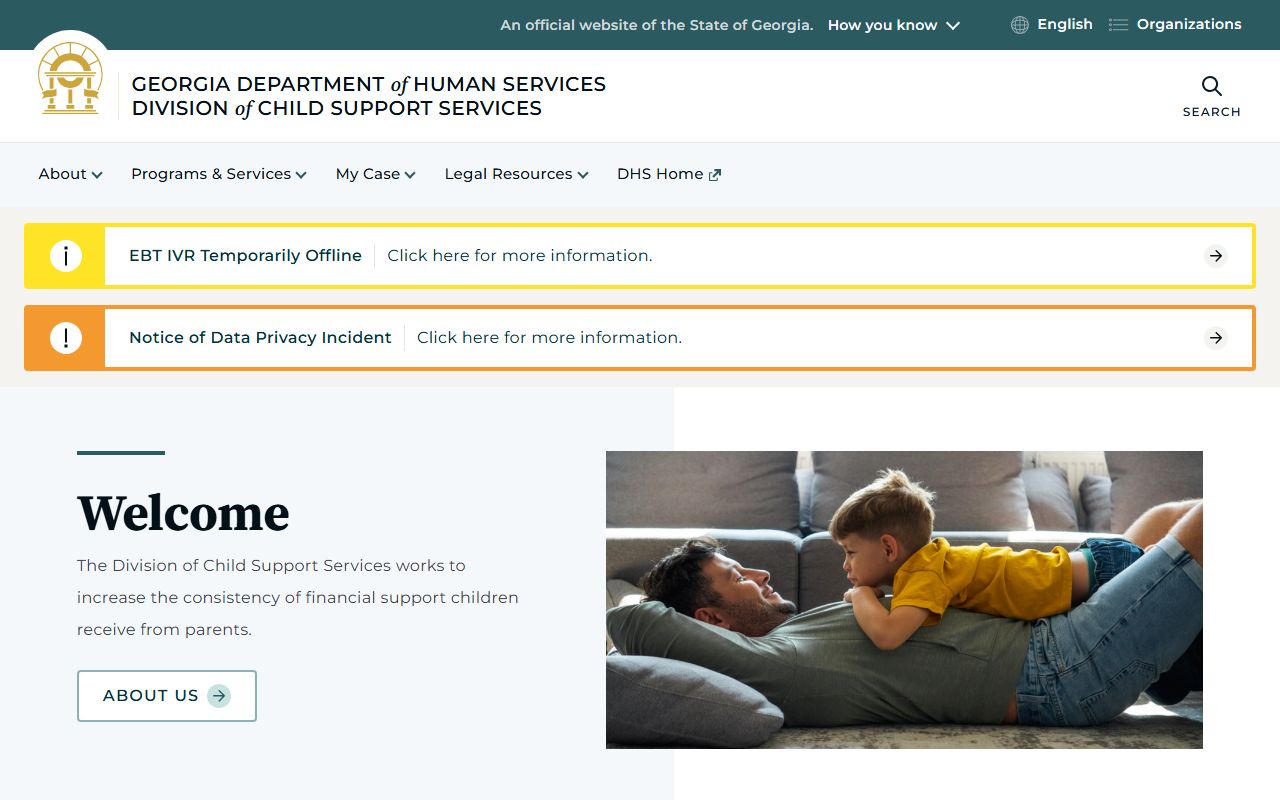
The Georgia Division of Child Support Services shown above is the state agency that handles support enforcement. If you need help with a child support case in Banks County, DCSS can assist with locating parents, setting up payments, and enforcing orders. Their phone number is 1-877-423-4746. Lobbies are open Tuesday through Thursday from 9 AM to 3 PM.
The GSCCCA main site also offers a Filing Activity Notification System that alerts you when new documents are filed in a case. This can be useful if you want to keep track of ongoing family court proceedings in Banks County.
Custody and Support Orders in Banks County
Child custody cases in Banks County are decided under O.C.G.A. § 19-9-3. The child's best interest drives every decision. The judge considers many factors: each parent's living situation, their work schedule, the child's ties to their school and friends, and any history of family violence. Georgia gives older children a voice. At 14, a child can choose which parent to live with. Between 11 and 13, the child's preference is heard but the judge has the final say.
Child support follows its own set of rules under O.C.G.A. § 19-6-26. The Banks County Superior Court has continuing jurisdiction over support orders it creates. Either parent can ask for a modification if income changes significantly or the child's needs shift. All of these proceedings generate court records that are stored at the clerk office in Homer.
Note: The CourtTRAX calculator can help you estimate court fees for family cases filed in Banks County.
Banks County Protective Order Process
Protective orders in Banks County are free to file. O.C.G.A. § 19-13-3 prohibits the court from charging a fee for petitions under the Family Violence Act. You go to the clerk office in Homer, fill out the forms, and a judge reviews the petition. If there is an immediate danger, a temporary order can be issued the same day. It lasts up to 30 days. A hearing is then scheduled where both sides can speak. The final order, if granted, lasts up to one year or up to three years in severe cases.
The Georgia government site on protective orders walks through the full process. It covers what evidence to bring, what forms to fill out, and what to expect at the hearing. For emergency help, call the statewide domestic violence hotline at 1-800-334-2836.
Nearby Counties
Banks County is in the foothills of northeast Georgia. These neighboring counties each have their own Superior Court for family law cases.